
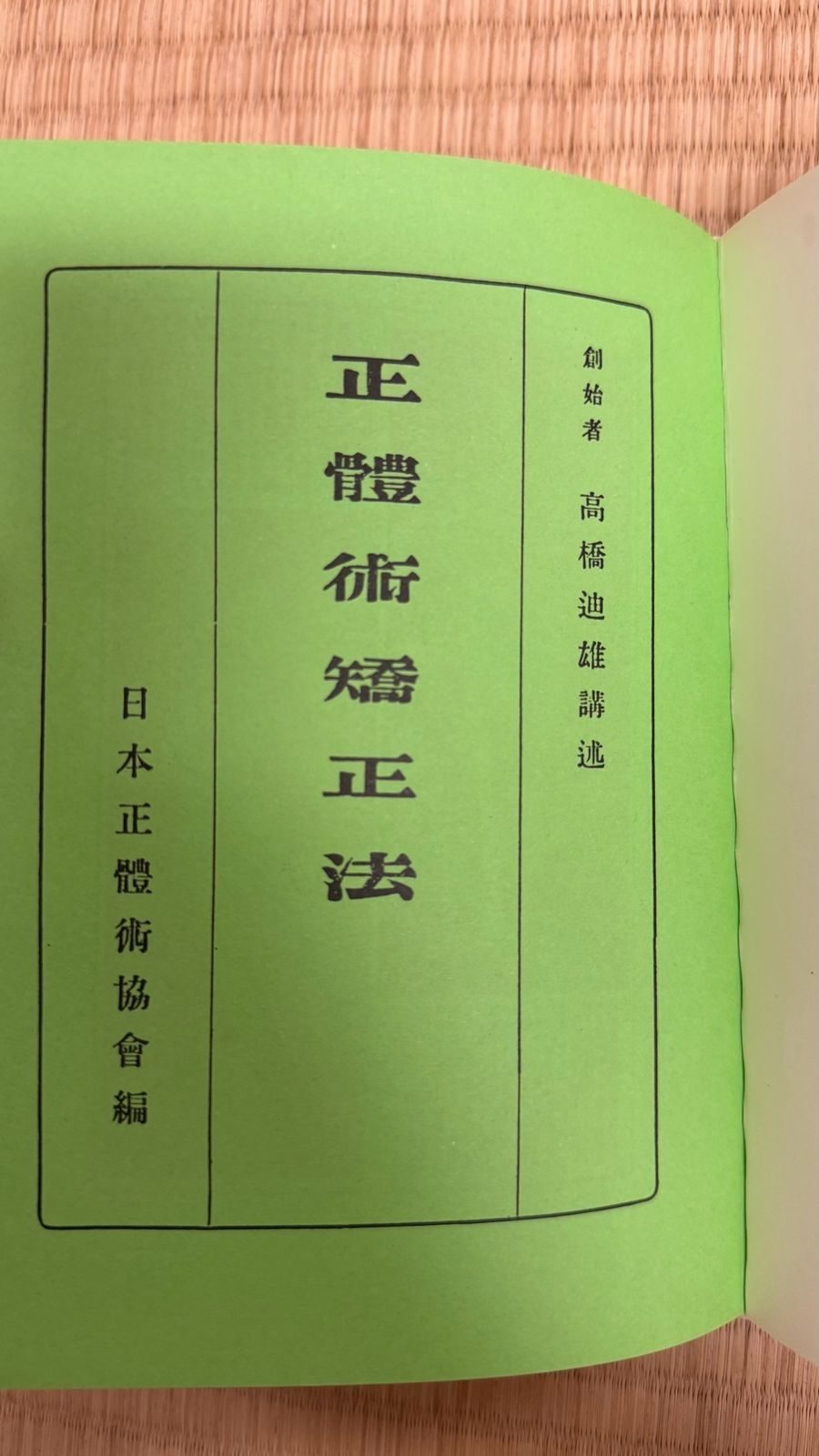
表紙(所蔵本)|株式会社日本指圧研究所Cover (copy held by the Institute) | Japan Shiatsu Institute
棚2 No.1 古書紹介 Classics of Shiatsu 日本の手技療法Japanese Manual Therapies
正體術大意・正體術矯正法
Seitai-jutsu: The Art of Correcting the Body (working English title)
自分で体を正す術。操体法が影響を受けたとされる古典。
The source of Sotai-ho: the art of correcting one’s own body.
1書誌情報 Bibliographic Information
- 書名Title
- 正體術大意・正體術矯正法Seitai-jutsu: The Art of Correcting the Body (working English title)
- 著者Author(s)
- 高橋迪雄 講述/日本正體術協會 編Michio Takahashi (lectures); edited by the Japan Seitai-jutsu Association
- 出版社Publisher
- 日本正體術協會(所蔵本は谷口書店の復刻版)Japan Seitai-jutsu Association (the Institute’s copy is the Taniguchi Shoten reprint)
- 発行年Year
- 第一部 1926年(大正15年)/第二部 1928年(昭和3年)Part I: 1926 (Taishō 15) / Part II: 1928 (Shōwa 3)
- 版・刷Edition
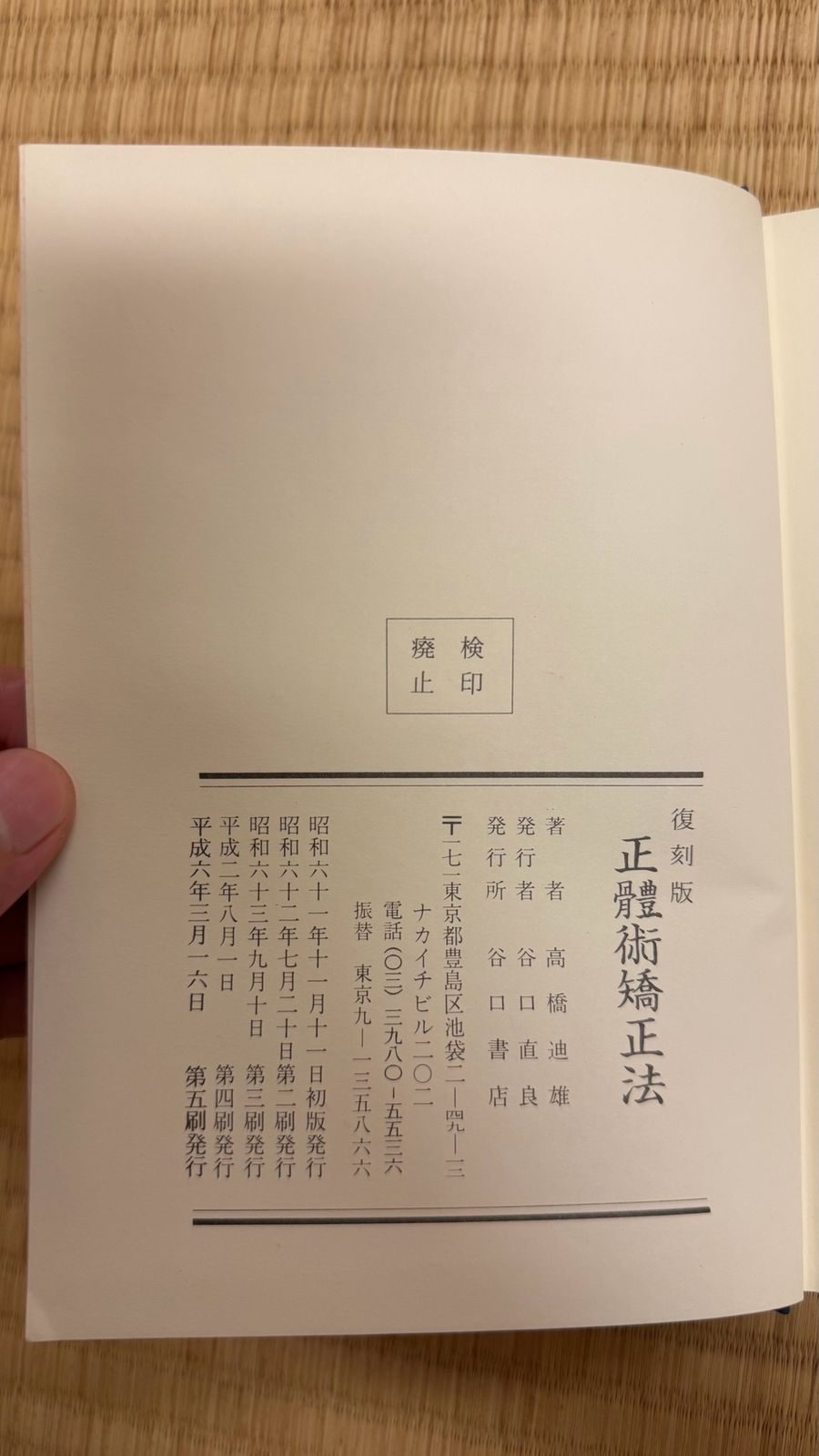
- 谷口書店(東京都豊島区池袋)「復刻版 正體術矯正法」、発行者 谷口直良。初版は昭和61年(1986年)11月11日。所蔵本は平成6年(1994年)3月16日の第5刷。原本2冊を1冊に復刻した合本。Taniguchi Shoten (Ikebukuro, Toshima-ku, Tokyo), “Reprint: Seitai-jutsu Kyōseihō,” publisher Naoyoshi Taniguchi. First edition 11 November 1986; the Institute’s copy is the 5th printing, 16 March 1994. The two original volumes are reprinted together in one book.
- 奥付の記載Colophon
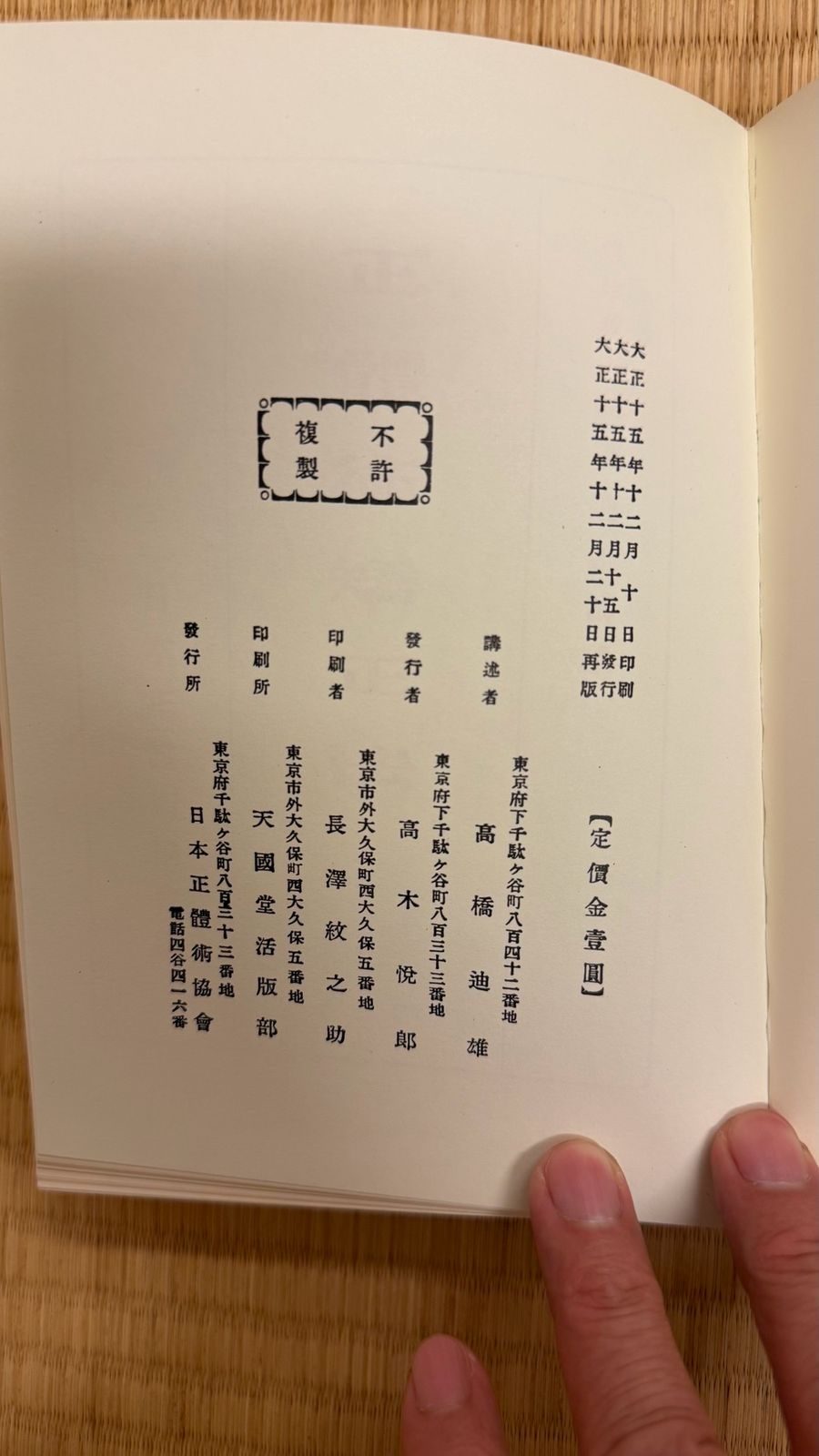
- 第一部『正體術大意 ―健康保全 病根一掃』:大正15年(1926年)12月10日印刷・12月15日発行・12月25日再版。定価金壱圓。講述者 高橋迪雄(東京府下千駄ヶ谷町)、発行者 高木悦郎、印刷者 長澤紋之助、印刷所 天國堂活版部。「不許複製」の印あり。口絵寫眞26個。本文70ページ(69ページに別篇「正體の物體化」あり)。
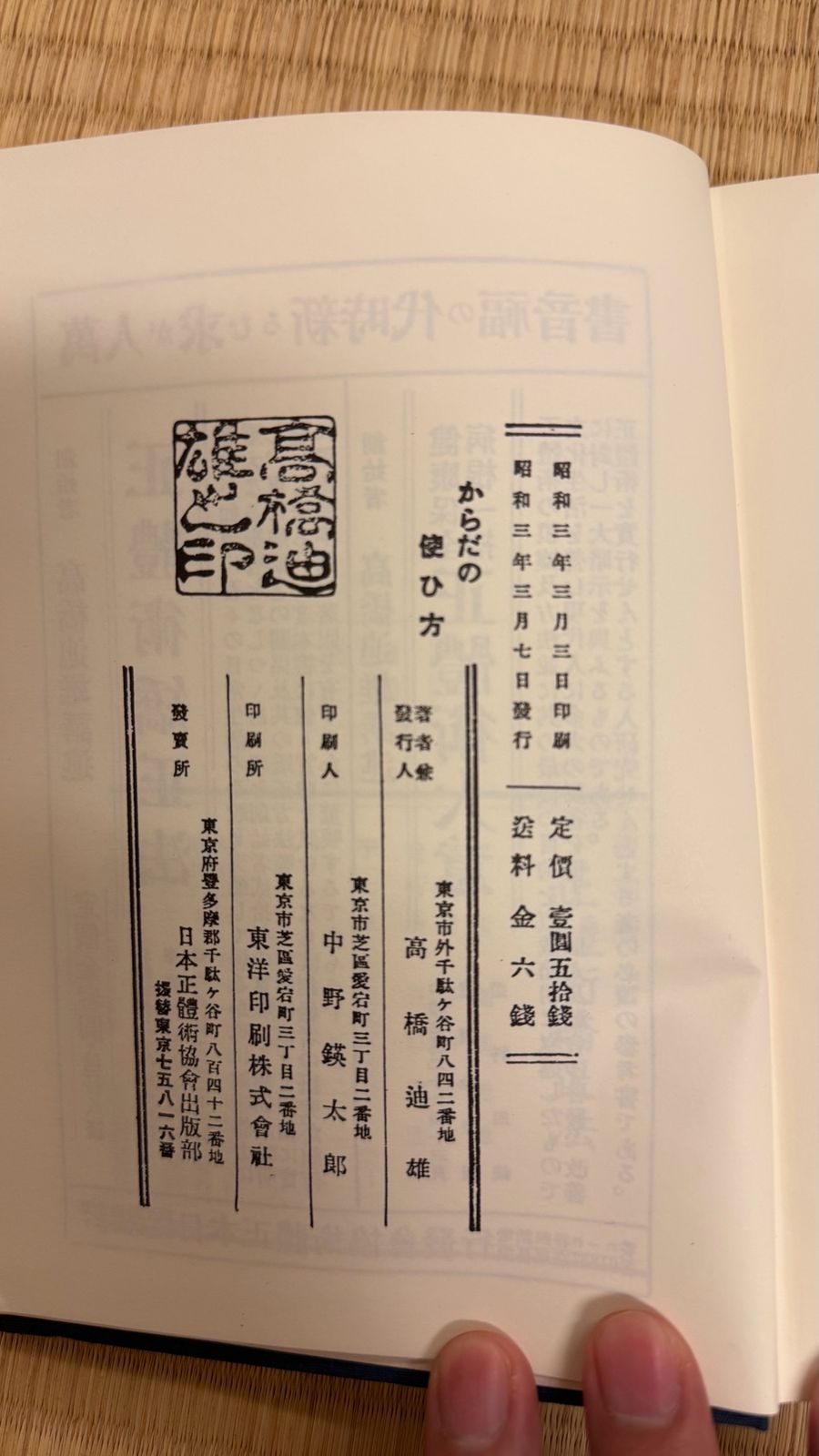
第二部『正體術矯正法』:昭和3年(1928年)3月3日印刷・3月7日発行。著者兼発行人 高橋迪雄、印刷所 東洋印刷株式會社、發賣所 日本正體術協會出版部(豊多摩郡千駄ヶ谷町)。奥付の定価は壱圓五拾銭・送料六銭(巻末広告では定価金参圓・送料八銭、本文295頁、挿入凸版273個、口絵寫眞24個)。編集責任者 高木悦郎・岡部長節(昭和2年2月)。Part I, Seitai-jutsu Taii — Health Preservation, Eradicating the Root of Illness: printed 10 December, published 15 December, reissued 25 December 1926 (Taishō 15). Price 1 yen. Lectures by Michio Takahashi (Sendagaya-machi, Tokyo); publisher Etsurō Takagi; printer Monnosuke Nagasawa; printed by Tengokudō Printing. Marked “reproduction prohibited.” 26 frontispiece photographs; 70 pages of text (with a supplement, “The Embodiment of Seitai,” on p. 69).
Part II, Seitai-jutsu Kyōseihō: printed 3 March, published 7 March 1928 (Shōwa 3). Author and publisher Michio Takahashi; printed by Tōyō Printing Co.; sold by the Japan Seitai-jutsu Association Publishing Department (Sendagaya-machi, Toyotama-gun). The colophon gives the price as 1.50 yen plus 6 sen postage (the advertisement at the back gives 3 yen plus 8 sen postage, 295 pages of text, 273 inserted plates and 24 frontispiece photographs). Editors: Etsurō Takagi and Chōsetsu Okabe (February 1927). - 構成Structure
- 第一部『正體術大意』全7章・本文70ページ/第二部『正體術矯正法』本文295頁・症例六十数話(原本2冊を1冊にした復刻合本)Part I, Seitai-jutsu Taii: 7 chapters, 70 pages / Part II, Seitai-jutsu Kyōseihō: 295 pages with more than sixty case records (a reprint combining the two original volumes in one)
- 分野Subjects
- 正體術・自己矯正・セルフケア・操体法への影響Seitai-jutsu, self-correction, self-care, the origins of Sotai-ho
- 所蔵Collection
- 株式会社日本指圧研究所Japan Shiatsu Institute Co., Ltd.
- 著作権の状態Copyright Status
- 著者・高橋迪雄の没年は公の資料でも不詳のため、著作権の存続の可能性を考慮し、本文の転載および本文ページの写真掲載は行っていません。掲載している写真は、所蔵本の表紙・口絵・目次・奥付などの書影です。
表紙・扉・口絵
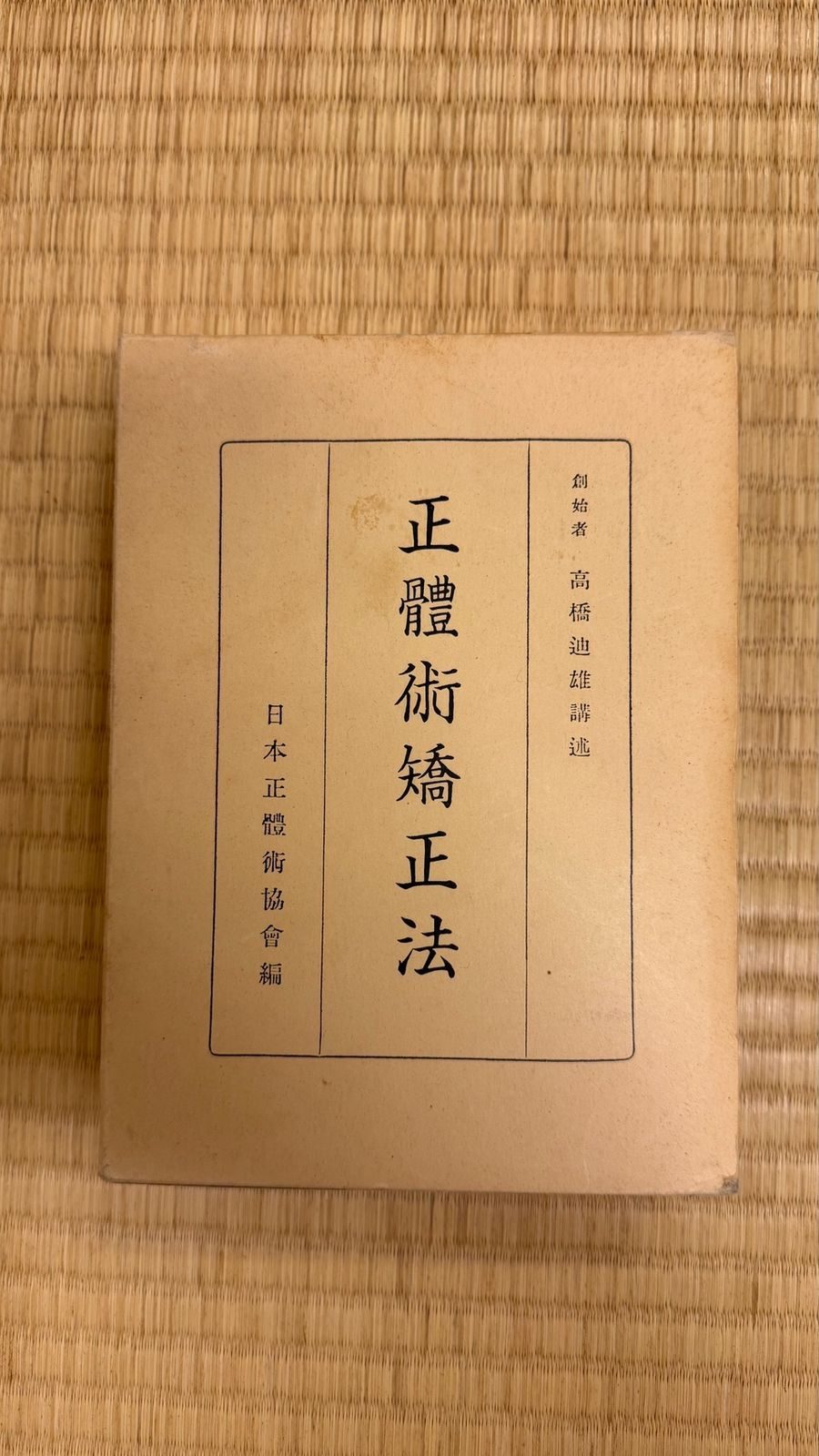
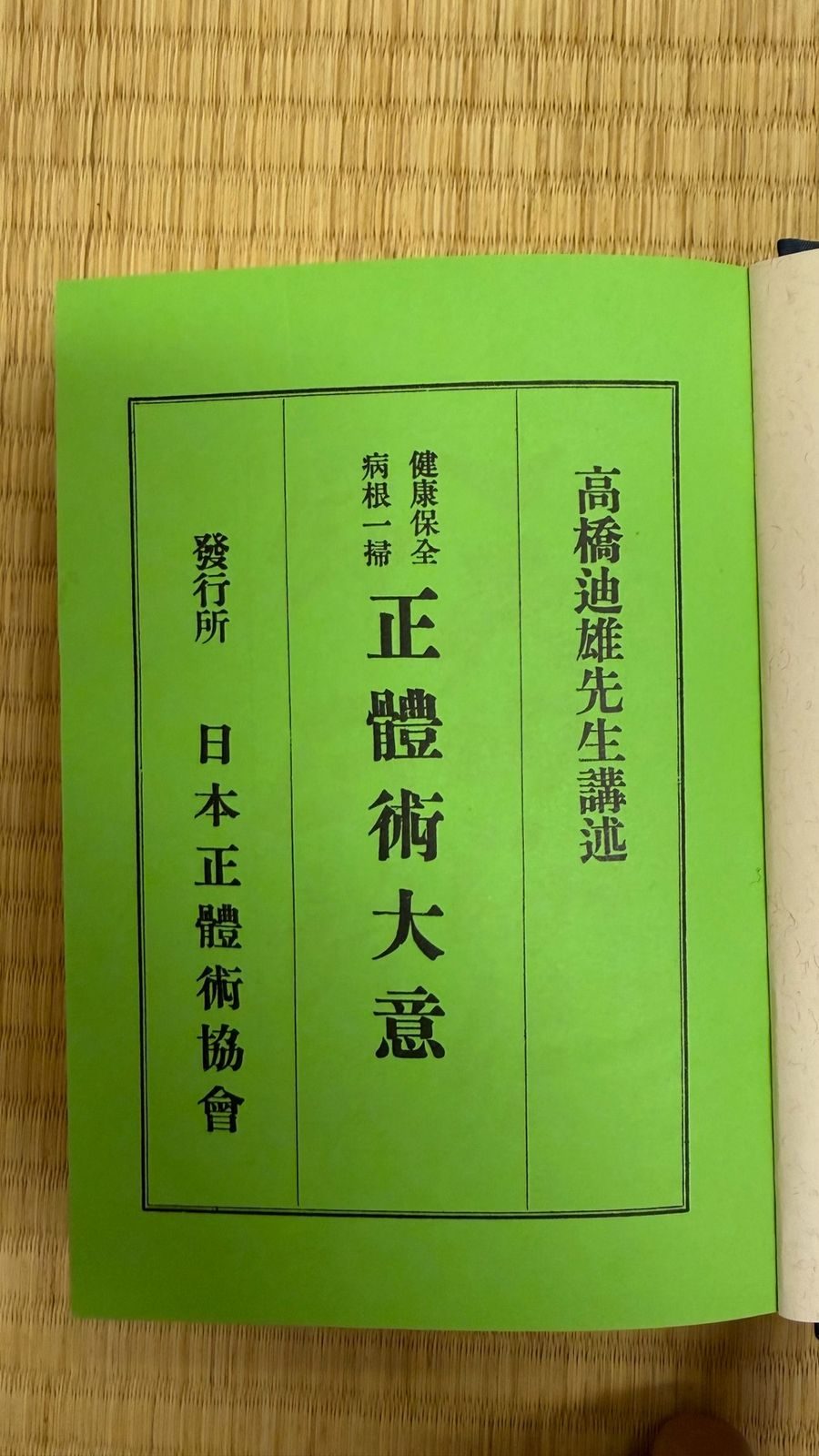
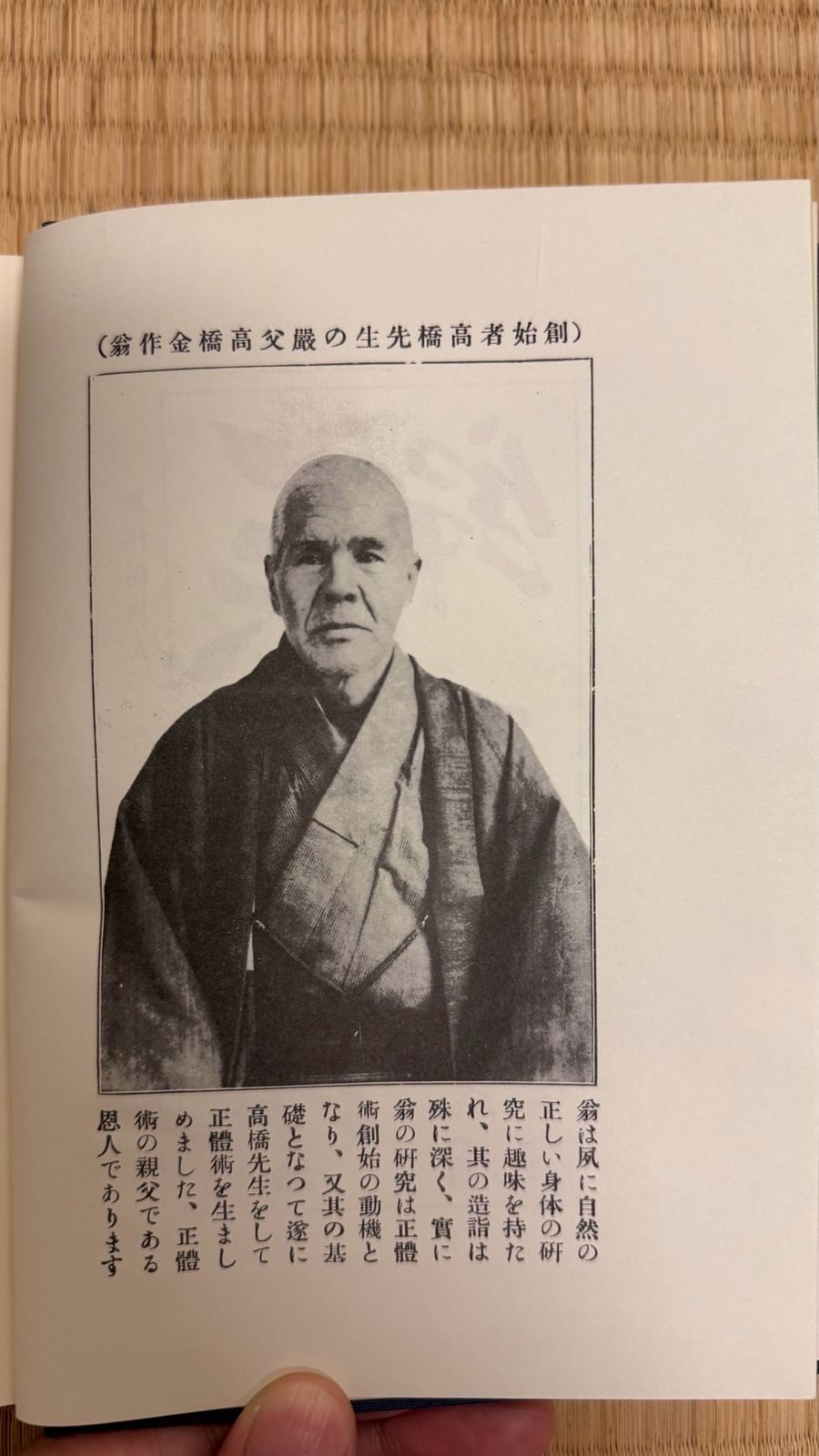
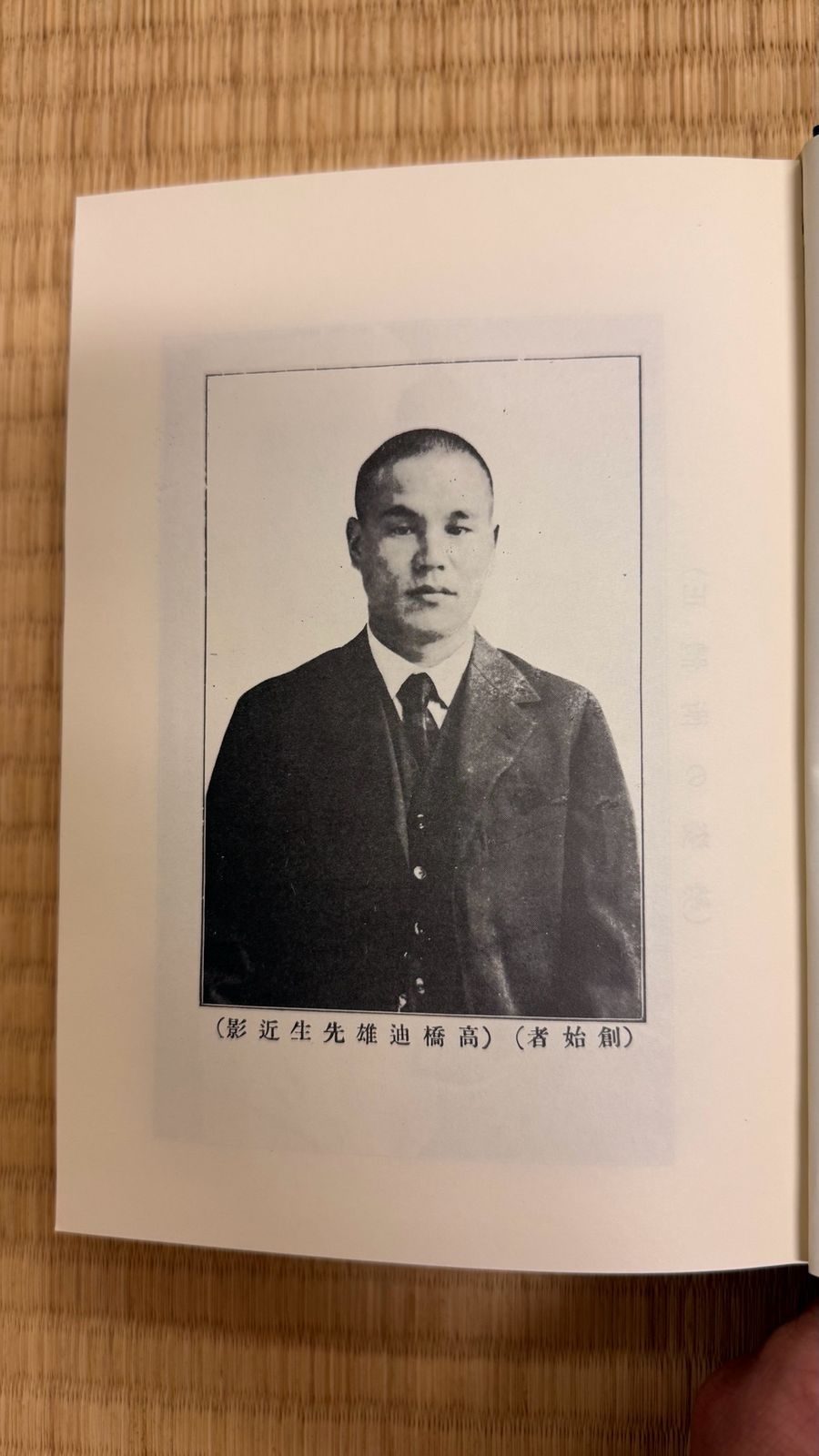
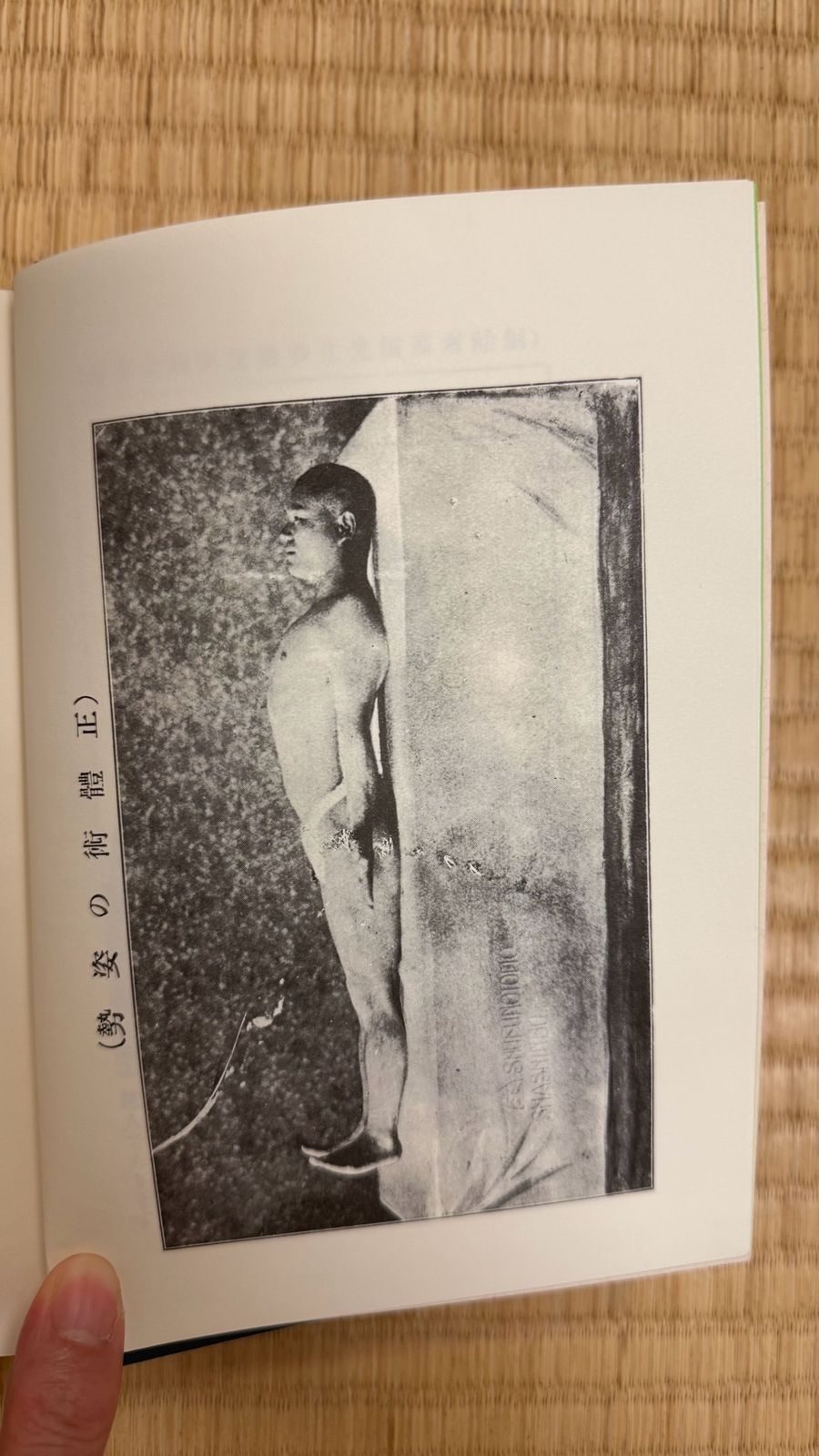
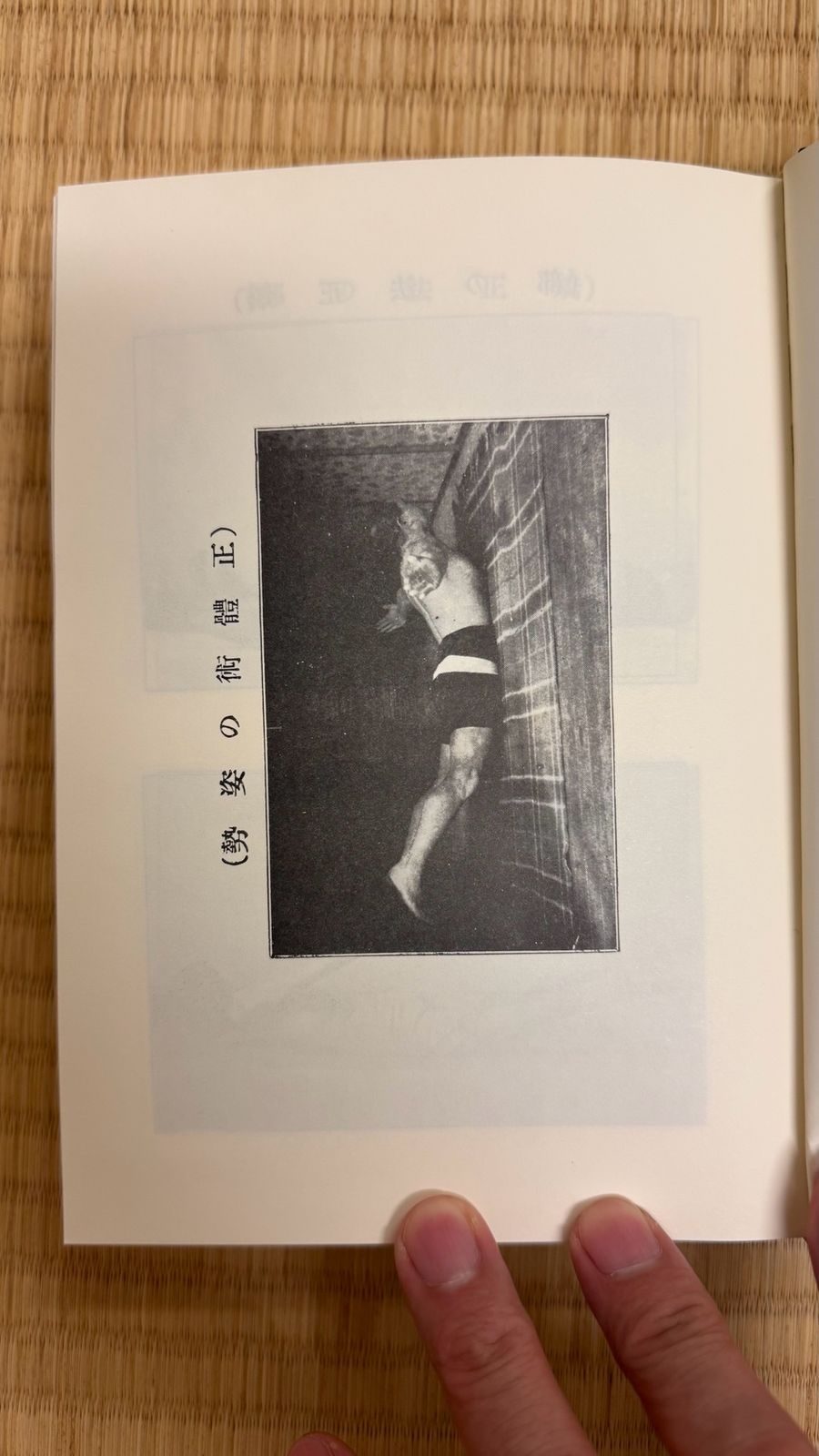
奥付
2著者紹介 About the Authors
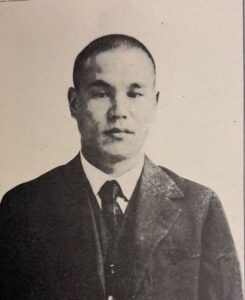
著者 / Author
Michio Takahashi
正體術の創始者
Founder of Seitai-jutsu
正體術の創始者。自分の不正な身体を、十数年から数十年にわたる経験と研鑽で矯正しながら、その方式を創案し、「正體術」と命名した(序・高木悦郎による)。父・高橋金作翁は「正しい身体」の研究を生涯の仕事とし、その基礎の上に迪雄が正體術を完成させた(口絵の説明文による)。当時の住所は東京府下千駄ヶ谷町。生没年は所蔵本に記載がなく未確認。
Founder of Seitai-jutsu. While correcting his own improperly aligned body through ten to several tens of years of experience and study, he devised the method and named it “Seitai-jutsu” (according to the preface by Etsurō Takagi). His father, Kinsaku Takahashi, made the study of “the correct body” his life’s work, and on that foundation Michio completed Seitai-jutsu (according to the caption to the frontispiece). At the time he lived in Sendagaya-machi, on the outskirts of Tokyo. His dates of birth and death are not given in the Institute’s copy and remain unconfirmed.
3総目次 Contents
第一部『正體術大意』(全7章)
一、正體術の基礎的原理/二、正體及その維持/三、正しき骨骼は心身健康の根源/四、正體術の方法とその意義/五、不正體の矯正法と正體術との関係/六、正體術の特長と心身修養法/七、正身正心及正しき人間生活。別篇「正體の物體化」(69ページ)。
第二部『正體術矯正法』見出し
正體術とはどんなものか/生理的に完全な状態/どうして完全せしめるか/どうして姿勢をなほすか/何故この方法が有効か/骨骼が果して正しくなるか/運動競技とどう違ふか/練習に暇がかゝるか/不可能の場合なし/なぜ科學的で合理的か/体はどうして歪むか/歪みの見つけ出しかた/最も多い不正のいろいろ/足の骨の動きかた/坐骨・骨盤の動きかた/脊柱の撚れ・曲り・動き/正體になるまで/正體術矯正法の根據と應用/矯正法圖解に就いて。
第二部・症例編(六十数話+餘談いろいろ)
一、冷え性で気の重い人/二、胃病で車に酔ふ女/三、びっこの老夫人/四、右足の利かぬ少年/五、妙な横ずわりの癖/六、腰の曲った青年/七、肋膜炎になる人/八、手足のねばる人/九、苦労性の女/一〇、ひどい肩の凝り/一一、肩のこりと冷込み/一二、左足の短い人/一三、鼻血の出る癖/一四、くちいた祟り/一五、姿勢は移り変わる/一六、動悸の高い人/一七、永年の慢性リューマチス/一八、便秘になやむ/一九、足の痛み/二〇、胸のつかえ/二一、産後の故障/二二、生来の便秘/二三、胃けいれんの手当/二四、痔の悪い青年/二五、胸やけとスパコ/二六、行儀の悪い子/二七、便秘いろいろ――以下、不眠と息切れ、内股の筋がつる、脚気が必ず癒る、下痢し易い人、胃酸過多症、産後のひどいリューマチス、背中全體痛む人、必ず痩せる法、耳が鳴る、など六十数話が続き、餘談いろいろで締めくくられる。実技的な項目(矯正の時期と度合、疲れの出た形、職業に依る歪み、下剤いらずの法など)も症例のあいだに混在する。
Part I: Seitai-jutsu Taii (7 chapters)
1. The fundamental principles of Seitai-jutsu / 2. The correct body and its maintenance / 3. A correct skeleton is the root of health of body and mind / 4. The method of Seitai-jutsu and its meaning / 5. The relation between correcting an improper body and Seitai-jutsu / 6. The distinctive features of Seitai-jutsu and the cultivation of body and mind / 7. A correct body, a correct mind and a correct human life. Supplement: “The Embodiment of Seitai” (p. 69).
Part II: Seitai-jutsu Kyōseihō — headings
What is Seitai-jutsu? / The physiologically complete state / How it is made complete / How posture is corrected / Why this method is effective / Does the skeleton really become correct? / How it differs from athletics / Does practice take time? / No case is impossible / Why it is scientific and rational / How the body becomes distorted / How to find distortions / The most common kinds of misalignment / How the bones of the foot move / How the ischium and pelvis move / Twisting, bending and movement of the spine / Until the body is correct / The basis and application of the correction method / On the illustrated correction methods.
Part II: Case records (more than sixty, plus miscellaneous notes)
Cases include a person with cold extremities and a heavy mood, a woman with stomach trouble and travel sickness, chronic stiff shoulders, long-standing chronic rheumatism, constipation, postpartum disorders, beriberi, diarrhoea, insomnia and more, ending with miscellaneous notes. Practical topics (timing and degree of correction, signs of fatigue, distortions caused by occupation, a method that makes laxatives unnecessary, etc.) are interspersed among the cases.
4本の特徴 Features of the Book
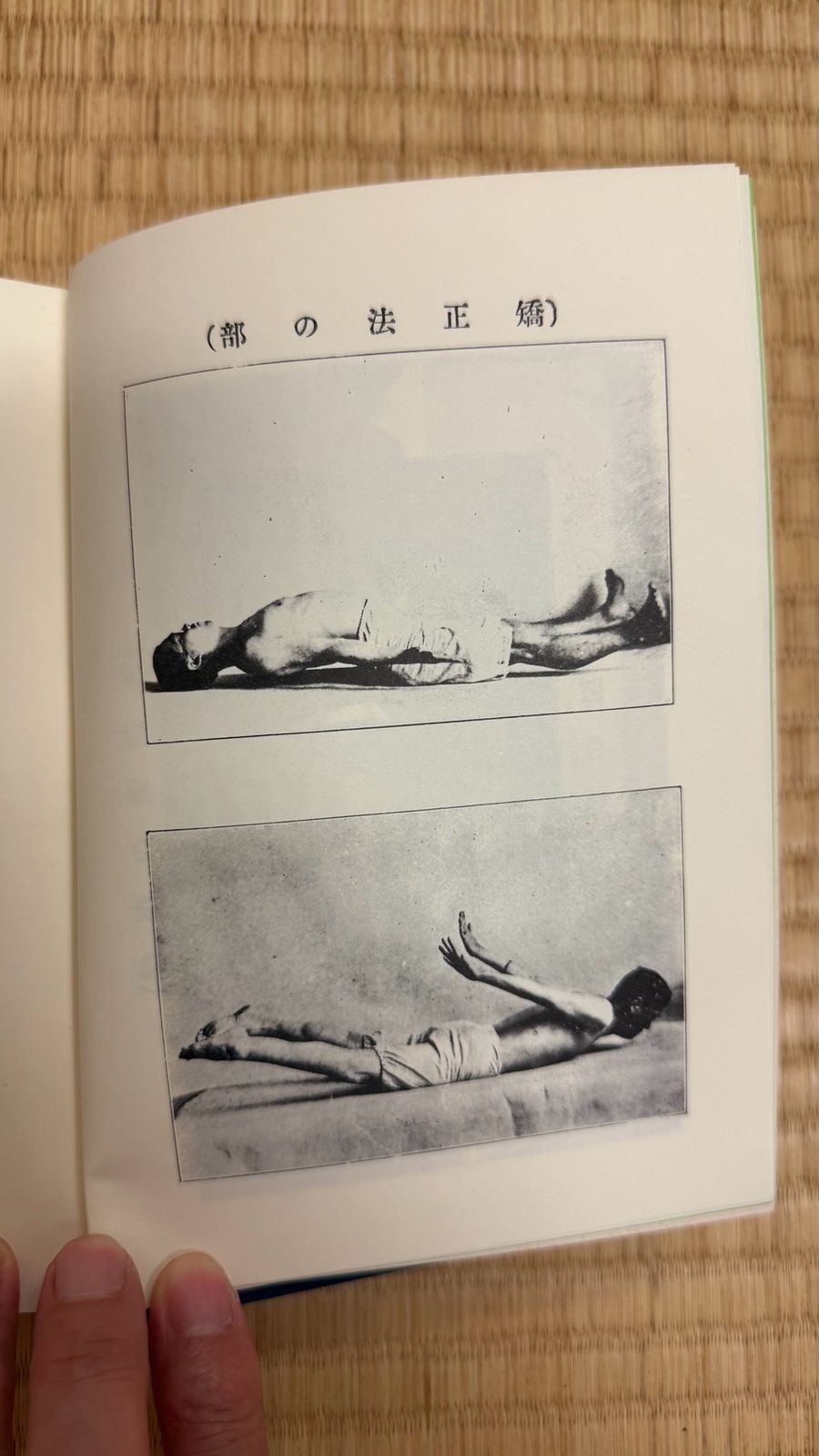
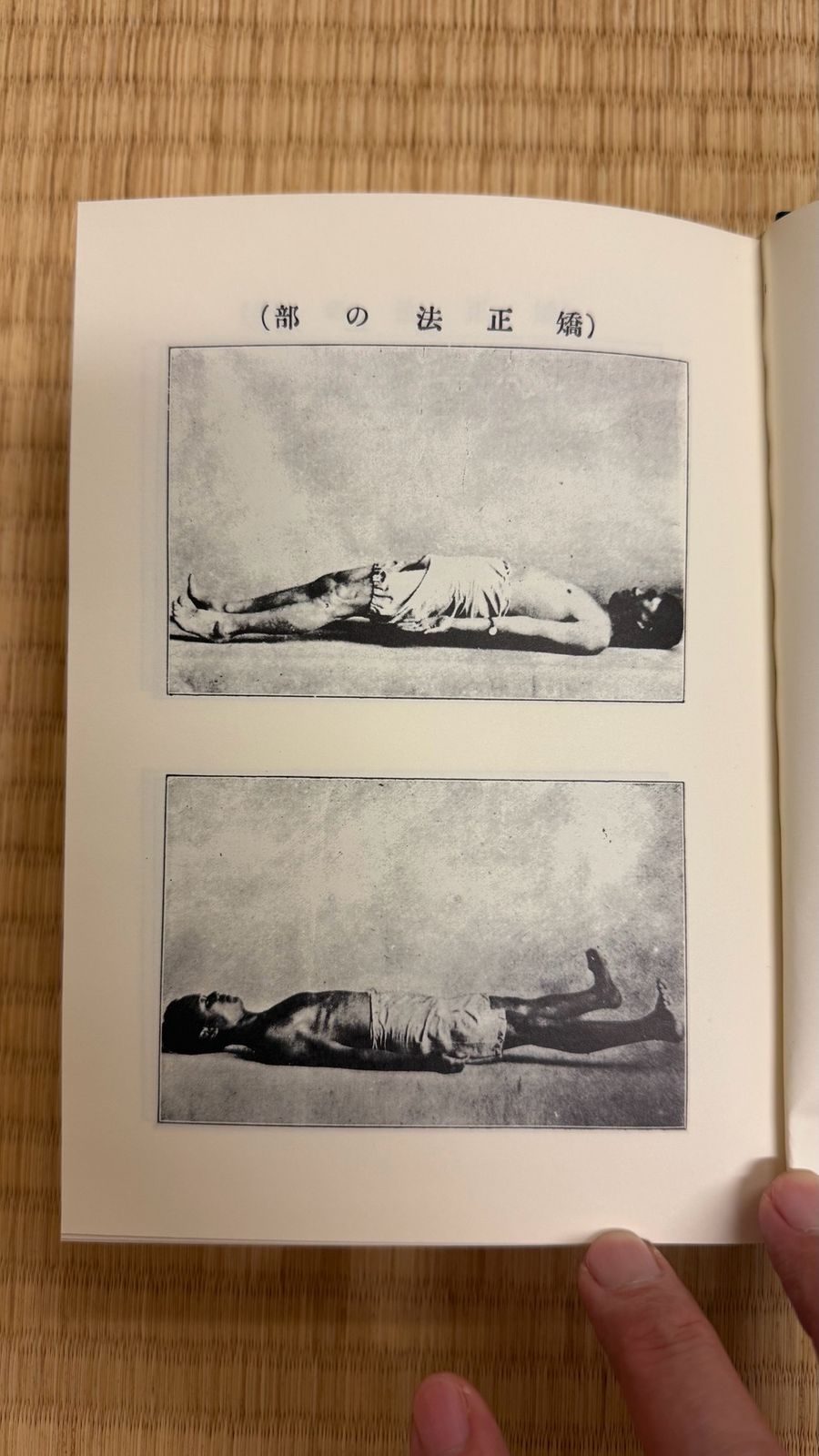
- 自分で体を動かす「自動運動」の自己矯正。 人にしてもらうのではなく、自力で体を正す方法である。図版「正體術の姿勢」(壁に沿った立位姿勢)と「矯正法の部」(仰臥・伏臥で自分で体を動かす矯正運動の写真)が、その実際を示す。
- 「骨格を正すことが全ての健康法の根本」。 第一部の立脚点は、「自然的健康を維持し、自然の生存力を発現させる原理」に立ち、他力に頼らず自力を用いる方法こそ最も自然だ、という考え方である。
- 方法は数十秒で簡単、生理的・理想的保健法。 序(高木悦郎)がそう説く。力を入れて数秒ののち一気に抜く、という原則が図版の説明に記されている。
- 実践編が本丸。 第二部『正體術矯正法』は、挿入凸版273個・口絵寫眞24個の図版と、症例六十数話を抱えた大部である。便秘の症例が三話ある点も、てのひらの臨床と響く。
- 操体法への影響。 橋本敬三は函館時代に、高橋迪雄の高弟・奥村隆則から正體術を学んだ。橋本が後に体系化した操体法は、正體術から大きな影響を受けたと考えられている。棚2「日本の手技療法」の先頭に置くのは、そのためである。棚2の並びは、高橋の正體術→操体法(橋本敬三)→野口整体(野口晴哉)→身体均整法(亀井進)→血液循環療法。
- 「鋭敏な観察眼」。 矯正の方式の適否を定めるには、鋭敏な観察眼が要る、と本文は説く。代表 宮下雅俊の望診・切診の考え方と響くところである。
- Self-correction through “spontaneous movement” one performs oneself. It is a method of correcting one’s body by one’s own effort, not by having someone else do it. The plates “The Seitai-jutsu Posture” (a standing posture against a wall) and “The Correction Methods” (photographs of corrective movements performed lying on the back or front) show it in practice.
- “Correcting the skeleton is the root of all health methods.” Part I stands on the principle of “maintaining natural health and bringing out the body’s natural vitality,” holding that a method using one’s own strength, not relying on others, is the most natural.
- A simple method taking tens of seconds — a physiological, ideal way to keep healthy. So the preface (by Etsurō Takagi) explains. The captions state the principle: tense for a few seconds, then release all at once.
- The practice volume is the heart of the work. Part II, Seitai-jutsu Kyōseihō, is a large volume with 273 inserted plates, 24 frontispiece photographs and more than sixty case records. That three of the cases concern constipation also resonates with clinical practice at Tenohira.
- The source of Sotai-ho. Keizo Hashimoto’s Sotai-ho grew out of this work, which is why it stands first on Shelf 2, “Japanese Manual Therapies.” The shelf continues: Takahashi’s Seitai-jutsu → Sotai-ho (Keizo Hashimoto) → Noguchi Seitai (Haruchika Noguchi) → Shintai Kinsei-ho (Susumu Kamei) → blood circulation therapy.
- “A keen eye for observation.” The text says that a keen eye is needed to judge whether a correction method is appropriate — a point that resonates with the approach of the Institute’s representative, Masatoshi Miyashita, to diagnosis by inspection and palpation.
5要約 Summary
理論編『正體術大意』
第一部の『正體術大意』は、正體術の考え方を説いた理論編です。第一章の核にあるのは、「自然的健康を維持し、自然の生存力を発現させる原理」に立ち、他力に頼らず自力を用いる方法こそ最も自然だ、という考え方です。序では、骨格を正すことがすべての健康法の根本であり、その方法は数十秒でできる簡単な、生理的かつ理想的な保健法だと説いています。
全七章は、正體の原理とその維持から始まり、骨骼と心身の健康、正體術の方法と意義、不正體の矯正法との関係、正體術の特長と心身修養法を経て、正身正心と人間生活へと進みます。
実践編『正體術矯正法』
私にとって、この二冊のうちの本命は、第二部の『正體術矯正法』です。
実践編の見出しは、「正體術とはどんなものか」「どうして完全せしめるか」「骨骼が果して正しくなるか」「運動競技とどう違ふか」「なぜ科學的で合理的か」と、問いの形で並びます。続いて、体がどうして歪むのか、その歪みをどう見つけるのか、足・坐骨・骨盤・脊柱をどう動かすのかが説かれ、矯正法の圖解へと進みます。写真では、力を入れて数秒ののちに一気に抜く、という原則が示されています。自分で体を動かす「自動運動」による自己矯正が、この実践編の特徴です。
症例編には、冷え性、胃病、肩の凝り、慢性リューマチス、便秘、産後の故障、脚気、下痢、不眠など、六十数話の臨床の記録が収められています。一話ごとに「どういう人が、どう正されたか」が具体的に綴られ、理論編の言葉が実践の手ざわりを帯びてきます。
Part I, Seitai-jutsu Taii (An Outline of Seitai-jutsu, 1926), sets out the theory; Part II, Seitai-jutsu Kyōseihō (Methods of Correcting the Body, 1928), is the practice. The founder, Michio Takahashi, devised the method while correcting his own improper body over many years. Its principle is to maintain natural health and bring out the body’s natural vitality by one’s own effort, not by relying on others — the skeleton made right is the root of all health methods. The practice is self-correction through movement one performs oneself, done in tens of seconds: tense the body for a few seconds, then release all at once. Part II carries 273 illustrations and more than sixty case records, from stiff shoulders and chronic rheumatism to constipation and postpartum disorders. This is the source from which Keizo Hashimoto later developed Sotai-ho. The copy in the author’s collection is the Taniguchi Shoten reprint (first edition 1986; this copy, 5th printing, 1994), combining the two original volumes in one.
書評|宮下雅俊 Review by Masatoshi Miyashita
整体という言葉は、いろんな療法を含んでいる言葉だと思っています。操体法の橋本敬三先生の本で、操体法が高橋迪雄先生の正體術から来ているという箇所を読んだことがあります。正體術とはどういったものなのかを知りたくて、本を探して購入しました。私自身、操体法の学会にも参加したことがあり、大変興味を持って手にした本です。
現代では整体というと「整える体」という字を書きますが、昔の字では「體」と書きます。私には、この字が「骨が豊か」と読めます。日本語の漢字の意味は、昔の方がもっと豊かだったんだなと思います。
私が持っている整体の本の中でも、この本はかなり古い部類に入ります。他にも古い本はあるかもしれませんが、まずはこの一冊です。
セルフケアの源流をたどる
いま「セルフケア」という言葉は、皆さんの中で当たり前のように広がっています。その源流をたどるとき、日本にも古来からこういうものがあったのだと知るうえで、この本はもっと研究されてもいいのではないかと思います。
世田谷指圧治療院てのひらでは、セルフケアの指導をしています。皆さんがよく使う「ストレッチ」という言葉がありますが、私もそれを正しく伝えられるようになりたいと思いました。ボブ・アンダーソンが提唱したストレッチングは、1970年代にアメリカを中心に世界中へ広がりました。その源流をたどると、インド発祥のヨガに行き着きます。では、まずヨガから勉強しようと学びを進め、インド政府認定のヨガ指導者の資格を取得しました。
その大きな源流がある中で、日本にはどのように伝わり、日本人に合うようにどう調整されてきたのか。そういう大きな流れを読むことができて、とても面白いと思います。
理論というのは、もしかしたら後付けなのかもしれません。実際に行って、その技で効果があった。では、それは何か。その問いに答えるように、後から理論が構成されていくのが手技療法なのだと思います。
ただ、現代の科学から見て、その理論は合っているのかなと検証するのは、面白い試みだと思います。そして、自分の体感に意識を向けること。自分の体が感じるということに意識を向けることが、現代では少し弱くなってきているのかもしれません。
I think of the word seitai as one that encompasses many different therapies. In a book by Keizo Hashimoto, the founder of Sotai-ho, I once read a passage saying that Sotai-ho came from Michio Takahashi’s Seitai-jutsu. Wanting to know what Seitai-jutsu actually was, I searched for this book and bought it. I have attended meetings of the Sotai-ho society myself, and I took up this book with great interest.
Today seitai is written with the characters for “arranging the body,” but in the old form the character for “body” was written 體. To me, this character reads as “bones in abundance.” I feel that the meanings of Japanese kanji were richer in the past.
Among the books on seitai that I own, this one is among the oldest. There may be other old books, but this is the one to begin with.
Tracing the Source of Self-Care
The word “self-care” has now become commonplace for everyone. In tracing its source — in learning that Japan, too, has long had practices of this kind — I think this book deserves to be studied far more.
At Setagaya Shiatsu Clinic Tenohira we teach self-care. Everyone uses the word “stretching,” and I wanted to be able to convey it correctly. The stretching advocated by Bob Anderson spread around the world, centred on the United States, in the 1970s. Tracing it back, one arrives at yoga, which originated in India. So I decided to study yoga first, and went on to obtain a yoga instructor qualification certified by the Government of India.
Within that great current, how did these practices come to Japan, and how were they adapted to suit Japanese people? Being able to read that larger flow is, I find, fascinating.
Theory may perhaps come afterwards. Something is actually done, and the technique works. Then — what is it? I think manual therapy is a field in which theory is built afterwards, as an answer to that question.
Still, examining whether that theory holds up in the light of modern science is an interesting undertaking. And so is turning one’s attention to one’s own bodily sensations. Paying attention to what one’s own body feels may have become somewhat weaker in our times.
(Composed from the oral account of Masatoshi Miyashita. English translation by the editor.)